Community


Waterhouse Message Board

« Forum Index


An interview with Peter Trippi …

MESSAGE:

From Kelowna.com - Kelowna, British Columbia.
Entertainment Section
Leah Sandals - Av E N U E; Questions & Artists; Pin-ups from an age before pins

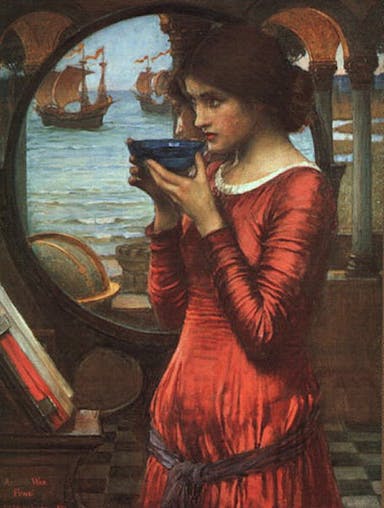
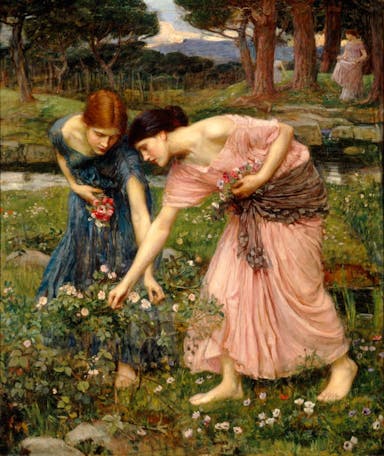
"It's that resolution-riffic time of year again, with folks everywhere attempting to jettison the old — be it weight, work or worry — in the name of the new. But as a current Montreal Museum of Fine Arts exhibition on Victorian-era J.W. Waterhouse attempts to show, the venerable can be vital when reframed in the right way. Here, New York curator Peter Trippi tells Leah Sandals how the Lady of Shalott connects to Kate Moss, and why Waterhouse is still wonderful.

Q: Waterhouse reminds me of dorm room posters. How do you hope to make his paintings special again?
A: The other curators and myself knew in advance that many people would come to this exhibition with those types of memories in mind. That's actually not a bad hook. The fact is we've looked at this artist afresh, and decided to show that there's more to him than pretty pictures. It's not just decoration — it's something more profound.
Waterhouse was engaged with art for decades. He was a highly intelligent, passionate communicator of classical myth and literature. In his paintings, he's thinking through what those myths really mean; he's taking stories and making them his own. The afterlife of the artwork is, of course, beyond the artist's control, but that's interesting, too.

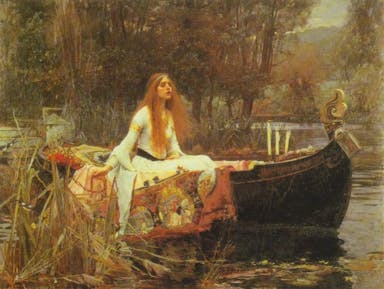
Q: Waterhouse's best-known painting, 'The Lady of Shalott', is based on Tennyson's famed poem of a heroine who's cursed to see the world only through images. What was Waterhouse trying to say with this?
A: In his day, Waterhouse was reading the poem with a mind to two things. One is the situation of artist, with Tennyson foregrounding the need for artists to be out in the world of people, but also needing to be apart from people to succeed. Another thing he was thinking of was women and their situation. At that time, many women were captured in a gilded cage of sorts, cut off from normal interactions because of 19th-century norms.
 
Q: When this exhibition was showing in England last year, critics complained that all of Waterhouse's women look the same, and simply blur the line between art and erotica. What's your response?
A: Well, I thought these critics were reading the work through the eyes of 2009, which is not fair. What a picture means to you today tells you little about what it meant in the past. And we argue in this exhibition that Waterhouse was very aware of women's power in many forms — artistic, sexual and intellectual.
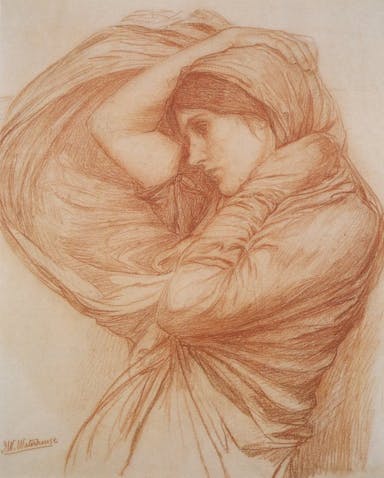
Also, this idea of Waterhouse's women looking too much the same is ludicrous when you look at other Victorian artists. Look at Rossetti, who is undisputed as a master by these same critics. He was always painting the same type of women. Granted, they're different in some ways from Waterhouse's models. But Waterhouse's women coincide greatly with our current ideal of feminine beauty. If we look at Kate Moss or others marching down the runways, Waterhouse pops up in a way that Rossetti doesn't. He was modern, and we see that reflected in fashion magazines and television today.

Q: This exhibition includes a film by rock star Melissa Auf Der Maur, who carried a picture of Lady of Shalott during years of touring as a good luck charm. What circles do you think Waterhouse would move in if he was around today?
A: I think Waterhouse today would run in filmmaking circles, and possibly musical ones. We see the presence of music in a lot of his pictures, and it's interesting that musicians like Rod Stewart and Andrew Lloyd Webber have bought Waterhouses.
To me each Waterhouse picture is a movie still of sorts — some, with their dynamic angles, could easily feature George Clooney or Russell Crowe. And it's no coincidence that these types of paintings died as movies became popular. One of Waterhouse's favourite galleries was actually converted into a movie theatre when that happened.
I also think Waterhouse today, as back then, would be interested in beauty with a capital B. We see a lot of ugliness in Hollywood today –and in Chelsea galleries, for that matter. But Waterhouse was interested in people, in this other world of beauty. And I think that's still part of what draws people to him now."


– J.W. Waterhouse: Garden of Enchantment continues to Feb. 7 at the Montreal Museum of Fine Arts. Visit mmfa.qc.ca for more information.


 RESPONSES:

There are not any responses to this message yet.


Post a reply

You need to login before posting a new message.


« Go to Forum Index

Â